
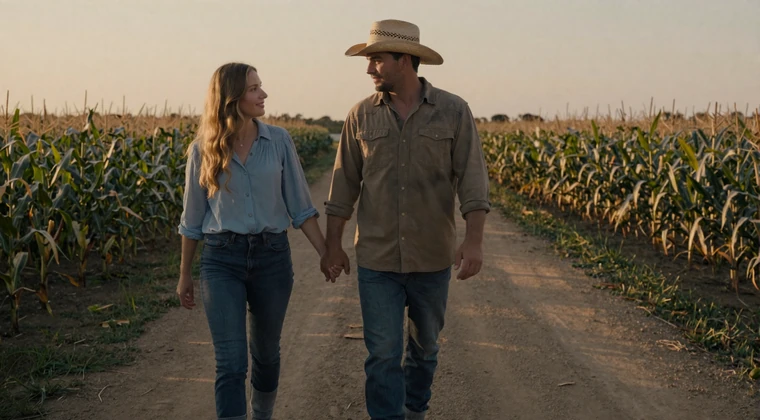
When City Meets Country
Dating a non-farmer comes with a moment every agricultural single knows too well: the conversation where you explain that "chore time" isn't optional, your alarm goes off before the sun, and the nearest Target is 45 minutes away. It's not a dealbreaker - but it's a conversation that needs to happen, and sooner beats later.
The good news? Roughly 19% of U.S. dating app users say they'd be open to relocating for the right partner (Pew Research, 2025). The key isn't convincing someone to love farm life. It's giving them an honest picture so they can decide for themselves. And it starts before you ever meet in person - right there in your dating profile.
Key Takeaways
- Be upfront about your lifestyle in your dating profile - vague bios attract the wrong matches.
- Don't oversell the romance of farming or hide the hard parts. Honesty saves everyone time.
- Invite your partner to the farm after 3-5 dates - early enough to be real, late enough to matter.
- Patience is everything. A city person can absolutely adapt - if they choose to, not if they're forced.
Start with Honesty in Your Dating Profile
Your dating profile is the first place to explain farm life to a potential partner - and most farmers get it wrong. They either write nothing about their work ("I like the outdoors") or go full almanac ("I run 600 head of Angus on 2,400 acres"). Neither approach attracts the right person. What works is showing how farming shapes your daily life in ways that affect a relationship.
Here's a practical checklist of what to include in your bio:
- Your schedule in plain language. Don't say "I work a lot." Say "I'm up at 5 a.m. and usually free by 7 p.m. - later during harvest." Specifics help a city person visualize what dating you actually looks like.
- What lives on your property. Horses, cattle, chickens, crops - a quick mention gives context. "I share my mornings with 40 dairy cows and a border collie named Biscuit" tells more than any paragraph could.
- Your location - honestly. If the nearest coffee shop is 30 miles away, say so. People who are okay with distance will self-select in. Those who aren't will save you both the trouble.
- Seasonal availability. A single line - "Summers are crazy busy, but winters are all mine" - sets realistic expectations from the start.
- What you're looking for in a partner. "Someone who doesn't mind mud on the porch" works better than "must love farming." You're not hiring a farmhand. You're finding a partner.
A well-written profile does the hard work for you. It filters out people who'd never be happy in the country and attracts those who are genuinely curious. Our complete profile creation guide walks through photo tips and icebreakers that work specifically for farmers.
Expectations vs. Reality of Dating a Farmer
City folks have a picture of farm life in their heads - shaped by Instagram, Hallmark movies, and that one episode of Farmer Wants a Wife. The reality is both better and harder than the fantasy. Here's what your partner probably imagines versus what they'll actually experience.
| What They Imagine | What It's Actually Like |
|---|---|
| Golden sunsets on the porch every evening | Golden sunsets happen - while you're still fixing the fence |
| Cute baby animals everywhere | Cute baby animals that need feeding at 2 a.m. in freezing rain |
| Peaceful, quiet countryside | Peaceful and quiet - until the rooster, the tractor, and the neighbor's dogs |
| Romantic home-cooked meals together | Eating whatever's fast because you have 20 minutes before evening chores |
| Cozy flannel-and-bonfire weekends | Weekends that look exactly like weekdays - livestock don't take Saturdays off |
| A simple, stress-free life away from the city | A physically demanding life with financial stress tied to weather and commodity prices |
Landon Heaton, a 35-year-old rancher from Coyle, Oklahoma who appeared on FOX's Farmer Wants a Wife, manages a 700-acre ranch about an hour from Oklahoma City. His dedication to the land meant relationships always took a back seat - until he realized the right partner wouldn't ask him to choose between the two. "You need to value the agricultural life and the person you're dating," Landon said. "When you do that, the hard parts stop feeling like sacrifices."
"Don't sugarcoat it and don't apologize for it. If they can't handle the honest version, they definitely can't handle the January version." - Landon Heaton, rancher, Coyle, Oklahoma
The bottom line: the romanticized version of farm life isn't a lie - it's just incomplete. Your job isn't to kill the dream. It's to add the parts the movies leave out, and let your partner decide with full information.
When to Invite Them to the Farm
Timing the first farm visit is one of the most important decisions in a city-meets-country relationship. Too early feels like a test. Too late feels like you're hiding something. The sweet spot for most country dating couples? After 3 to 5 dates - once there's genuine interest, but before either of you is too emotionally invested to walk away if the fit isn't right.
Here's how to make the first visit work:
- Pick a low-pressure day. Don't bring them during calving season or harvest week. Choose a slower weekend where you can actually spend time together without running off every 20 minutes. Winter or early spring usually works best.
- Keep it short - half a day, not a full weekend. A morning tour, lunch in the kitchen, and an afternoon walk gives them enough to understand the lifestyle without feeling trapped. If it goes well, they'll want to come back. That's the signal you're looking for.
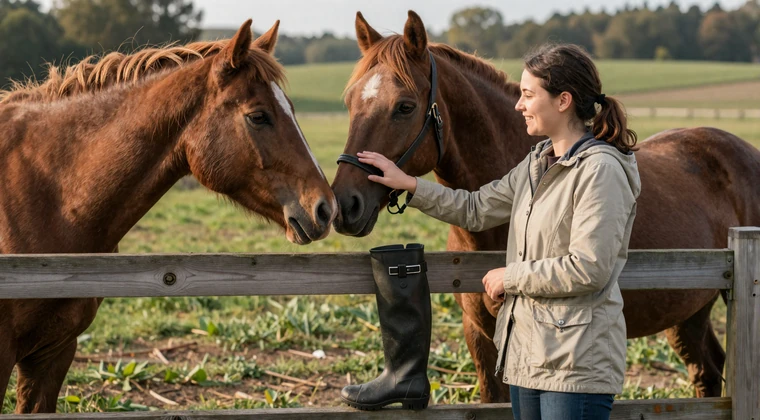
- Let them participate, but don't test them. Invite them to collect eggs or brush a horse. Don't hand them a shovel and say "let's see what you're made of." The goal is connection, not a job interview.
- Give them an honest debrief afterward. Ask what surprised them. Ask what concerned them. This conversation - not the farm tour itself - is where the real understanding happens.
Helping a City Partner Adapt to Rural Life
Adaptation isn't a single moment - it's a series of small adjustments that happen over months, sometimes years. The couples who make city-meets-country work share one trait: the farmer is patient, and the city partner is willing. Here's what that looks like in practice.
- Start small. Don't expect them to milk goats on week two. Start with the parts of rural life that feel like a reward - stargazing, bonfires, farmers market mornings. Let the harder realities arrive naturally as comfort grows.
- Share the "why" behind your routines. "I check the cattle at 5 a.m." means nothing without context. "I check the cattle at 5 a.m. because a newborn calf can die in two hours if something goes wrong" makes it real. When your partner understands the stakes, the schedule stops feeling arbitrary and starts feeling important.
- Respect what they're giving up. Moving from a city to a farm means losing proximity to friends, restaurants, gyms, and the convenience of a 10-minute commute. Acknowledge those losses out loud. Don't dismiss them as "city problems." They're real sacrifices.
- Create spaces that are theirs. A partner who moved from Denver to a ranch in Montana needs a corner of the house that feels familiar - a reading nook, a home office with fast Wi-Fi, a garden they planted themselves. Roots need somewhere to grow.
- Introduce them to the community slowly. Small towns can be overwhelming for newcomers - everyone knows everyone. Bring your partner to low-stakes events first: a church potluck, a feed store run, a neighbor's cookout. Let them build their own connections at their own pace.
Thinking about making the move? Our guide on moving to a farm after city life covers the practical side - what to expect in the first year, how to prepare financially, and the adjustments that catch people off guard.
The real question isn't whether a city person can adapt to farm life. According to a 2025 National Agricultural Statistics Service survey, 28% of farm spouses grew up in urban or suburban areas. It happens all the time. The question is whether both partners are willing to meet in the middle - the farmer making room for what their partner needs, and the partner making peace with what the farm demands.